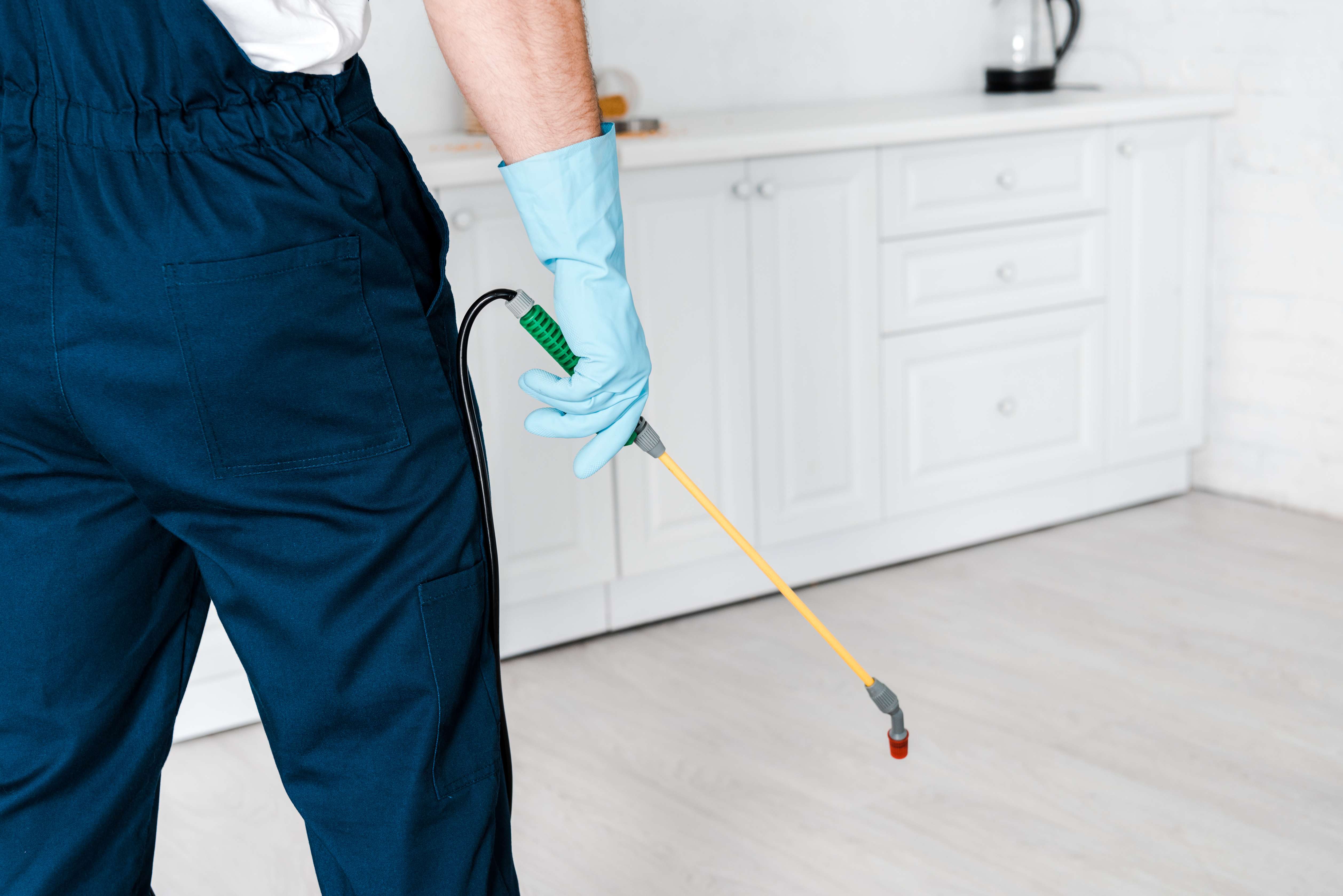

Termite inspection in
Salt Lake City
Inspection-Led Termite Control in Salt Lake City
Inspection, Treatment Planning, and Prevention
Inspection and Treatment
Inspection-Led Service
Don't Wait Until Termites Invade Your Property
Termite damage to homes and businesses in the United States costs billions annually. In fact, termites cause more damage to structures than fire, wind, and earthquakes combined. They are silent destroyers that can wreak havoc on your property without you even knowing it. In addition, they are nuisance pests that can be difficult to get rid of once they’ve infested an area. Aside from the damage they can cause, termites can also be a health hazard to you and your family.
- Allergic Reaction
Termites are incredible little creatures that can create many problems for people. For example, they’re known to leave behind shed skins, droppings, and dust when burrowing through the wood, which often causes allergic reactions in those who come into contact with them! Some mild forms may only result in skin irritation, while more severe ones could lead to respiratory distress requiring immediate medical attention.
- Trigger Asthma Attacks
The same dust that causes allergic reactions in some people can also trigger asthma attacks in those who suffer from the condition. So if you have asthma, it’s important to be extra careful when around areas where termites might be present
Our 3 Steps Termite Exterminator Process
Termite Inspection

Possible termite activity should be inspected before a treatment is selected. We examine accessible areas related to the reported activity and explain the evidence and conditions we find.
The inspection may include:
- Signs of termite activity: discarded wings, mud tubes, damaged wood, or other visible evidence.
- Wood conditions: accessible wood that appears hollowed, blistered, or otherwise affected.
- Foundation and access areas: cracks, gaps, moisture, wood-to-soil contact, and other conditions that may support activity.
These findings inform the recommended termite treatment, monitoring, and prevention steps for the property.
Termite Treatment Planning
Service begins with a property inspection. We explain visible evidence and conditions, then recommend a treatment scope for the affected or at-risk areas identified.
- Coordinate access: Arrange inspection and treatment access to the relevant areas.
- Target the findings: Match the proposed method to the evidence and property conditions.
- Explain monitoring: Outline follow-up inspection and prevention recommendations for the service.
Termite Monitoring and Prevention
Prevention recommendations depend on visible evidence, wood-to-soil contact, moisture, structural access, and other conditions found at the property.
Where appropriate, the plan may include scheduled inspection, monitoring, treatment of identified areas, and property-maintenance recommendations.
Salt Lake City, known for its beautiful landscapes and urban growth, is also home to various termite species. These wood-destroying insects can cause significant damage to properties if left unchecked. As a homeowner, it’s crucial to be informed about the types of termites in the area, their risks, and prevention methods.
Termite Species in Salt Lake City
Utah’s landscape is host to several termite species, with the most common being:
- Subterranean Termites: These termites are notorious for their destructive habits. They build extensive underground colonies and mud tubes to reach food sources above ground.
- Drywood Termites: Unlike their subterranean counterparts, drywood termites inhabit the wood they consume and do not require contact with the soil.
Termite Activity in Utah
More than three-quarters of Utah, including Salt Lake are active zones for termites. The northeastern part of the state is less prone to infestations.
Swarming Season
Termites typically swarm on warm days following rainfall, but in heated buildings, swarming can occur even in winter. In Utah:
- Eastern subterranean termites swarm from March to May during the day.
- Arid-land subterranean termites have their swarming peaks in the spring and fall.
- Western drywood termites usually swarm in the daytime during the fall.
Identifying Termites
Termites vary in color based on their caste within the colony:
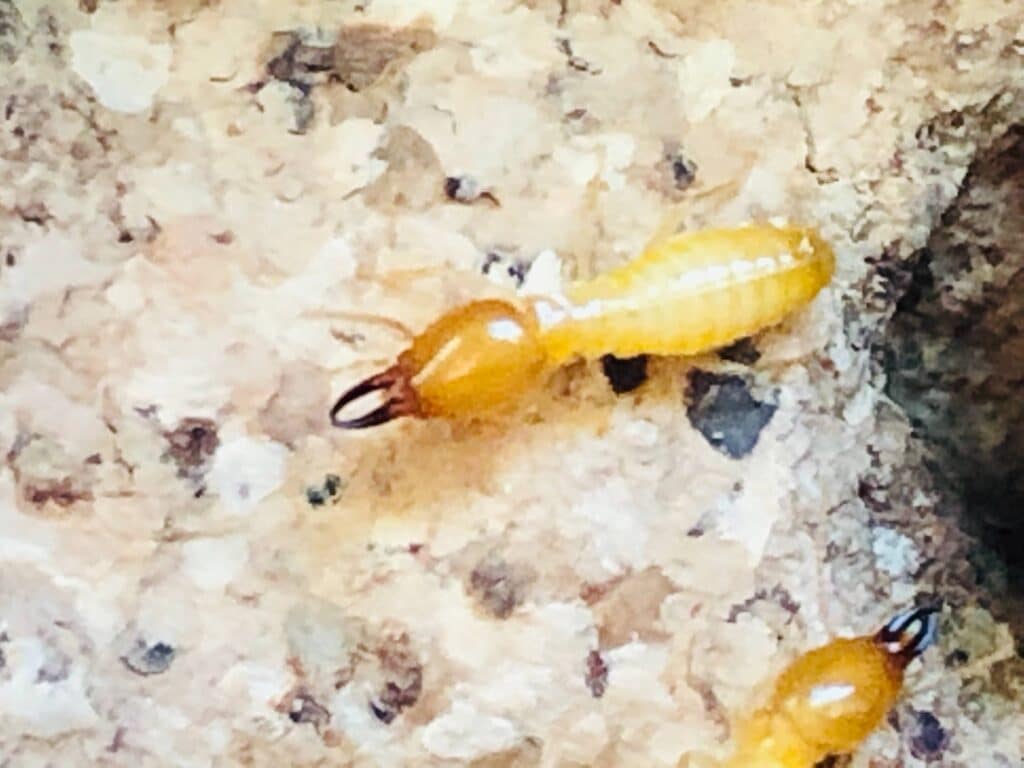
- Soldier Termites: Beige with large bodies and dark heads.
- Worker Termites: Range from soft caramel to milky white, are soft-bodied, and wingless.
- Swarmers (Reproductive Termites): Colors vary by species, with dampwood termites being tan or light yellow, and drywood termites having brown and red bodies

Termite Inspection and Treatment Planning
If you think you may have termite activity, call to schedule an inspection. We will explain the visible evidence, property conditions, and the treatment or monitoring options appropriate to those findings.
What are the Signs of Termite Infestation?
Termites are one of the most destructive pests, causing billions of dollars in damage yearly. Their feeding and damage can go unnoticed for years if it’s not too bad because the outer surface of wood usually remains intact. However, there are a few signs that you might have termites:
Damaged wood: hollowed out or blistering wood, wood that sounds hollow when tapped.
Mud tubes: small tubes of mud that termites use to travel from the ground to their food source.
Discarded wings: termites shed their wings after they mate and start new colonies.
Swarmer: large groups of winged insects flying around near lights.
Can Termites Fly?
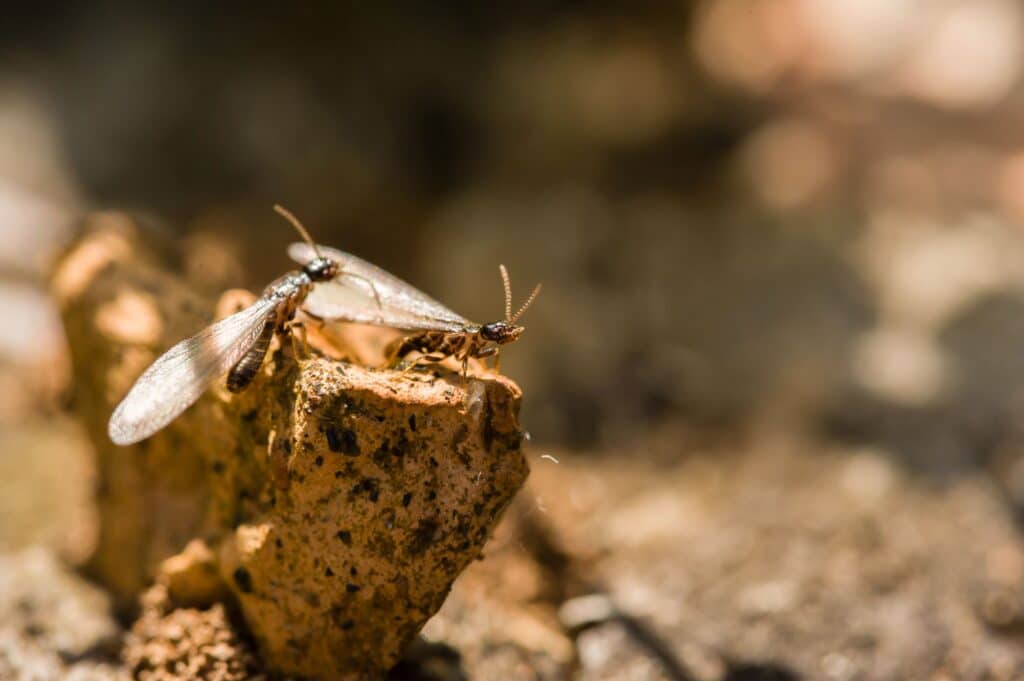
Indeed, certain termites possess the ability to take flight. The winged insects that may be observed in and around your residence or commercial establishment are known as swarmers. These flying termites are in search of a suitable location to establish a new colony. Encountering these swarmers is a strong indicator of an existing termite issue on your premises. It’s important to distinguish between these and flying ants, as both can appear similar at a glance. Understanding the differences between flying ants vs flying termites is crucial for proper pest identification and management.
What attracts termites?
There are a few things that can attract termites to your property:
- Wood: Termites are attracted to wood because it is their food source. If there is wood on your property, it’s more likely to be infested with termites.
- Moisture: Termites need moisture to survive. If your property is damp or has water leaks, it’s more attractive to termites.
- Mulch: Mulch is often used around landscaping and can attract termites. If you have mulch on your property, keep it away from the foundation of your home or business
How do I get rid of termites?
If you think you may have termite activity, an inspection can document visible evidence and the property conditions related to it.
We explain the proposed treatment scope and recommend practical monitoring and prevention steps based on those findings.
Inspection and Treatment
Service Process
Inspection-Led Pest Control
Follow-up recommendations depend on the pest, activity level, property conditions, and service plan discussed with the customer.
Call us to discuss the property, current pest activity, and the next inspection or treatment step.